

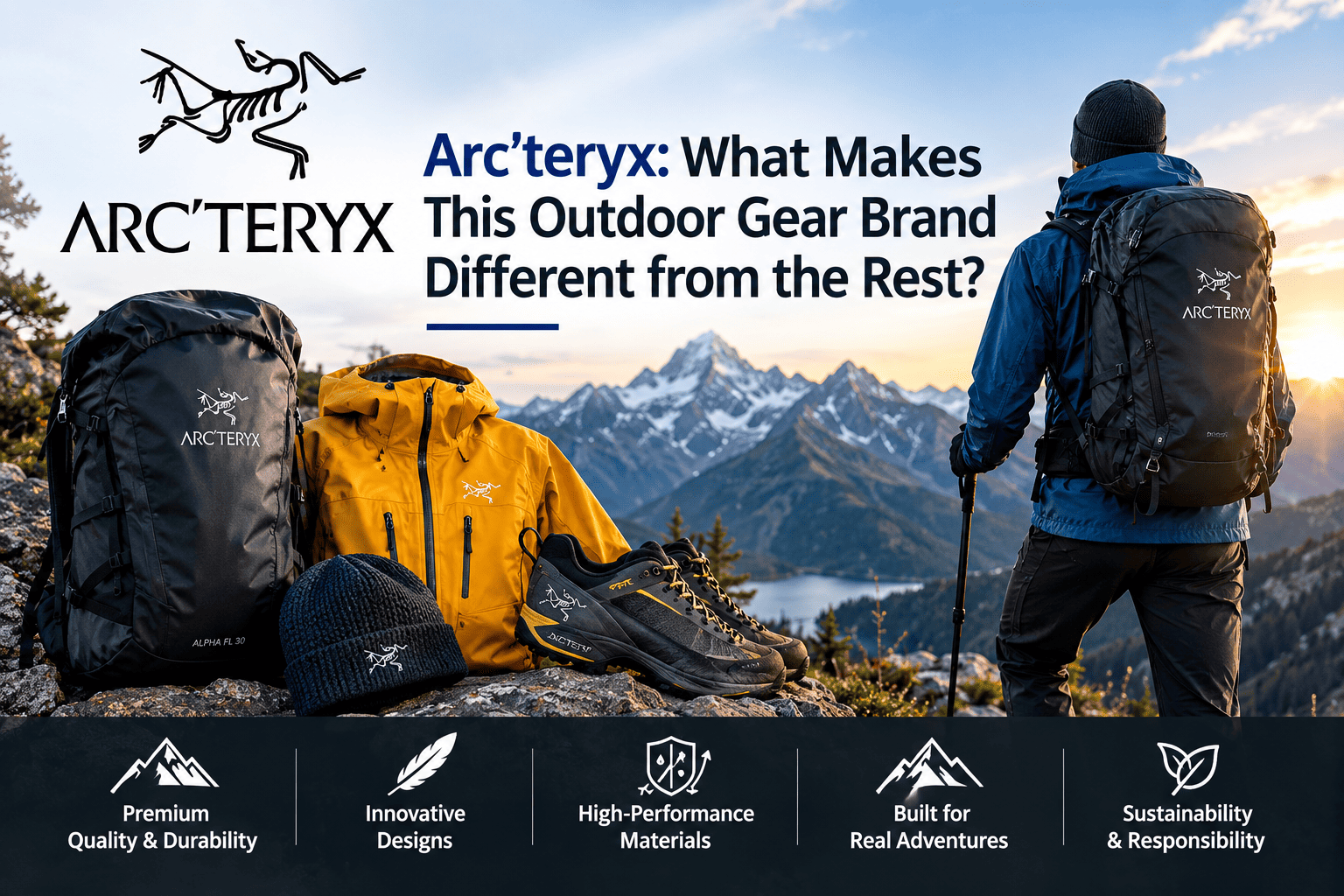
Arc’teryx is a Canadian outdoor clothing and equipment brand known for its technical jackets, weather-resistant materials, durable construction, and minimalist designs. Founded in 1989 in North Vancouver, British Columbia, the company initially focused on climbing equipment before expanding into technical apparel. Today, its products serve hikers, climbers, skiers, mountaineers, and people who appreciate functional outdoor clothing for everyday use.
Introduction
Outdoor clothing needs to provide more than an attractive appearance. It should help people remain comfortable in changing weather, move freely across different types of terrain, and withstand regular use. Arc’teryx has established its reputation by focusing on technical performance, thoughtful construction, and practical design. These qualities have made the brand recognizable among outdoor enthusiasts and people who prefer premium functional clothing.
However, what actually makes Arc’teryx different from other outdoor clothing companies? The answer involves its history, product development, material selection, attention to detail, and approach to durability. Understanding these factors can help shoppers determine whether its jackets, backpacks, footwear, and other equipment are suitable for their needs.
What Is Arc’teryx?
Arc’teryx is a premium outdoor apparel and equipment brand that develops products for mountain sports and demanding outdoor environments. Its product range includes waterproof shells, insulated jackets, hiking clothing, climbing equipment, backpacks, and accessories. The company emphasizes combining technical functionality with a relatively simple appearance, creating products designed around specific uses rather than unnecessary decoration.
The brand draws inspiration from the Coast Mountains of British Columbia, where wet conditions, changing temperatures, steep terrain, and unpredictable weather create demanding requirements for outdoor equipment. This environment influences its design philosophy and approach to product development. Rather than treating outdoor clothing as ordinary fashion, Arc’teryx focuses on how garments perform when protection, mobility, and reliability are important.
The History Behind Arc’teryx
Arc’teryx was founded in 1989 by climbers in North Vancouver, Canada. The company initially concentrated on climbing equipment, particularly harnesses and packs. Its early products reflected a practical challenge: developing equipment that could support climbers while remaining functional, comfortable, and dependable in difficult mountain conditions.
As the business developed, it expanded beyond climbing hardware into technical clothing. This transition allowed the company to apply its design principles to jackets and other apparel intended for outdoor activities. Over time, Arc’teryx became internationally recognized for its specialized outerwear and carefully engineered construction. Its history remains an important part of its identity because the brand developed around solving outdoor performance problems rather than beginning as a conventional fashion label.
What Makes Arc’teryx Different from Other Outdoor Brands?
1. A Strong Focus on Technical Design
One of the brand’s main distinctions is the attention given to the purpose of each product. A climbing jacket needs to support movement, resist challenging weather, and work comfortably with other climbing equipment. A hiking layer may have different priorities, including breathability, low weight, and convenient packing.
Arc’teryx develops products around these specific requirements. Its design process considers details such as seam construction, pocket placement, fabric selection, fit, and fasteners. Although these elements may appear minor, they can influence how comfortable and practical a garment feels during outdoor activities. This emphasis on function helps distinguish technical outdoor clothing from general-purpose jackets.
2. Materials Designed for Outdoor Conditions
Materials play a major role in outdoor clothing performance. Depending on the product, manufacturers may use waterproof membranes, wind-resistant fabrics, synthetic insulation, breathable textiles, and durable outer materials to address different environmental challenges.
Arc’teryx selects materials according to the intended purpose of each item. Waterproof shells are designed to help protect against rain and snow, while insulated garments focus on retaining warmth. Lightweight layers may prioritize moisture management and freedom of movement. Because no single fabric can solve every outdoor problem, choosing the right garment for the activity and conditions remains essential.
3. Attention to Construction and Small Details
The quality of outdoor clothing depends on more than the fabric itself. Stitching, seams, zippers, panel shapes, and closures all contribute to how a product performs over time. Poorly positioned seams can create discomfort, while an unsuitable fit may restrict movement or make layering difficult.
Arc’teryx has built its reputation partly around detailed product engineering. Its development process combines design work, testing, and feedback from people who use equipment in outdoor environments. The objective is to create garments that perform their intended functions without unnecessary complexity. This approach is particularly relevant to technical jackets, where construction choices can influence weather protection, durability, and comfort.
4. Minimalist Style with Practical Features
Another reason the brand attracts attention is its understated appearance. Many products feature clean lines, limited decoration, and carefully considered shapes. Instead of relying on large graphics or complicated patterns, the designs emphasize silhouette, fabric texture, and functional details.
This minimalist approach also makes some pieces easy to combine with everyday clothing. A technical shell can be worn on a hiking trail or during a rainy commute, provided it suits the weather and intended use. However, an attractive appearance does not automatically make every product appropriate for every activity. Buyers should consider technical specifications alongside design when selecting outdoor gear.
Understanding Arc’teryx Jackets
Jackets are among the most recognizable products associated with Arc’teryx. However, not every jacket serves the same purpose. Understanding the main categories can help shoppers select a suitable option instead of paying for features they may never use.
Waterproof Shell Jackets
Waterproof shell jackets are designed primarily to provide protection against rain, wind, and wet snow. Many technical shells use specialized membranes and sealed seams to help prevent water from entering while allowing some moisture vapor to escape. Their main purpose is weather protection rather than providing substantial insulation.
These jackets can be useful for hiking, climbing, and other activities where weather may change quickly. Since many shells are designed for layering, users can add a fleece or insulated jacket underneath when temperatures drop. Buyers should check the specific model’s waterproof performance, breathability, fit, and intended activity because capabilities vary between products.
Insulated Jackets
Insulated jackets focus on retaining body heat. Depending on the design, they may use down or synthetic insulation, each offering different benefits. Down insulation can provide a strong warmth-to-weight ratio, while synthetic insulation can be useful in conditions where moisture management is an important consideration.
The right option depends on temperature, activity level, and how the jacket will be worn. A highly insulated jacket may feel uncomfortable during strenuous exercise in mild weather, while a lightweight layer may not provide enough warmth during extended periods in cold conditions. Checking the product’s intended use is more helpful than assuming the most expensive model will always be the best choice.
Lightweight and Everyday Jackets
Some jackets are designed for lower-bulk protection, active movement, or daily use. These may appeal to people who want a practical outer layer without the weight or specialized features of a mountaineering shell.
For everyday wear, useful factors include comfort, pocket placement, ease of care, and compatibility with the local climate. A technical jacket designed for extreme alpine weather may offer capabilities that an urban commuter rarely needs. Matching the product to regular activities can therefore provide better value than choosing a model based solely on its reputation.
Is Arc’teryx Worth the Price?
Arc’teryx is generally positioned in the premium segment of the outdoor clothing market. Its products can cost substantially more than basic jackets and general-purpose outdoor apparel. That price reflects factors such as technical materials, product engineering, construction methods, specialized design, and brand positioning. Nevertheless, a premium price does not guarantee that every item will suit every customer.
Whether the expense is worthwhile depends on how often the product will be used and what it needs to do. Someone who regularly hikes in wet weather or participates in mountain activities may benefit from specialized protection and thoughtful construction. Someone who only needs a light jacket for occasional errands might find a less expensive alternative entirely adequate.
A sensible purchasing decision begins with identifying the actual requirement. Consider the local weather, expected activity, frequency of use, and features needed. Compare those requirements with the product specifications rather than assuming that a higher price automatically means better performance for your situation.
Who Should Consider Buying Arc’teryx?
Arc’teryx may be suitable for people who regularly participate in hiking, climbing, skiing, mountaineering, and other outdoor pursuits. These activities can place greater demands on clothing than ordinary daily use, making weather protection, mobility, breathability, and construction important considerations.
The brand can also appeal to people who prefer minimalist outdoor clothing for everyday wear. Its understated designs can work with casual outfits, although the technical features of some products may be unnecessary for routine activities. Before purchasing, consider whether you need specialized equipment or simply want a comfortable, versatile jacket. That distinction can make the decision much easier.
Arc’teryx and Its Approach to Sustainability
Durability is an important consideration when discussing the sustainability of outdoor clothing. Garments can have an environmental footprint through raw material production, manufacturing, transportation, and eventual disposal. Creating products that remain useful for longer may reduce the need for frequent replacement, although durability alone does not eliminate these environmental impacts.
Arc’teryx has explored product repair, responsible material selection, and circular design through its sustainability initiatives. Its ReBIRD program includes approaches intended to extend product life through care and repair. The broader objective is to encourage longer use of technical apparel and explore ways to reduce waste. As with any clothing company, the actual environmental impact depends on individual products, materials, manufacturing processes, and how garments are used and maintained.
For shoppers, practical steps matter too. Following care instructions, washing technical clothing correctly, maintaining water-repellent finishes when required, and repairing minor damage can help extend a garment’s useful life. Buying only what is needed and considering suitable secondhand products are additional ways to avoid unnecessary consumption.
How to Choose the Right Arc’teryx Product
Choosing the right product starts with understanding the conditions in which it will be used. Someone who hikes in a rainy climate may prioritize waterproof protection and breathability, while a person spending time in cold weather may need an insulating layer. Climbers may have additional requirements related to mobility, harness compatibility, and equipment access.
Fit is equally important. A jacket should allow comfortable movement and provide enough space for the layers you intend to wear underneath. Review the sizing information for the specific product, since fits can differ between designs. Consider the weight of the garment, its pockets, hood adjustment, ventilation, and ease of packing. These practical details often matter more than a long list of technical features.
Finally, establish a realistic budget. Decide which features are essential and which would simply be nice to have. If you expect to use the product frequently in demanding conditions, investing in specialized equipment may make sense. For occasional use, a simpler garment could meet your needs just as well.
Arc’teryx vs. Ordinary Outdoor Clothing
The main difference between technical outdoor clothing and general-purpose apparel is the level of specialization. Ordinary jackets may be suitable for light rain, mild temperatures, or everyday commuting. Technical outdoor garments are developed around more specific performance requirements, which can include weather resistance, ventilation, movement, and durability.
This distinction does not mean that every technical garment outperforms every ordinary jacket. Actual performance depends on the materials, construction, design, and conditions in which the item is used. A basic rain jacket may be perfectly adequate for a short walk, while a specialized shell may be more appropriate for prolonged exposure to challenging mountain weather.
Arc’teryx stands out through its focus on technical applications, detailed engineering, and minimalist styling. However, other outdoor brands also produce capable technical equipment. Comparing individual models and their specifications is more useful than judging an entire brand by its reputation alone.
Frequently Asked Questions
1. What Is Arc’teryx Best Known For?
Arc’teryx is best known for technical outdoor clothing and equipment, particularly waterproof jackets, insulated outerwear, climbing gear, and products designed for mountain activities. Its reputation is associated with detailed construction, functional design, and premium materials.
2. Why Is Arc’teryx So Expensive?
Its premium pricing reflects a combination of specialized materials, product development, technical construction, performance-focused features, and brand positioning. Whether a particular product is worth the cost depends on your needs, intended use, and budget.
3. Is Arc’teryx Suitable for Everyday Wear?
Yes. Many of its jackets and other clothing items can be worn for commuting, travel, and everyday activities. However, some technical features are designed for specialized outdoor use, so a less expensive jacket may be sufficient for routine needs.
4. Are Arc’teryx Jackets Waterproof?
Some models are designed to provide waterproof protection, while others focus on insulation, wind resistance, or lightweight comfort. Always check the specifications of the exact model rather than assuming that every jacket offers the same level of protection.
5. How Can You Make Arc’teryx Clothing Last Longer?
Follow the garment’s care label, use appropriate cleaning products, maintain its water-repellent finish when needed, and address damage promptly. Proper care can help preserve performance and extend the useful life of technical clothing.
Conclusion
Arc’teryx has distinguished itself through a combination of outdoor heritage, technical product design, carefully selected materials, and attention to construction. Founded by climbers in Canada, the company developed an identity around creating equipment for challenging outdoor environments and later expanded into a broader range of technical apparel.
What makes the brand different is not simply its recognizable logo or premium reputation, but its focus on designing products for specific performance needs. Nevertheless, its higher price does not make every product the right choice for every shopper. The best decision depends on your activities, climate, budget, and expectations. By comparing these factors carefully, you can determine whether Arc’teryx offers the functionality and long-term value you are looking for.