

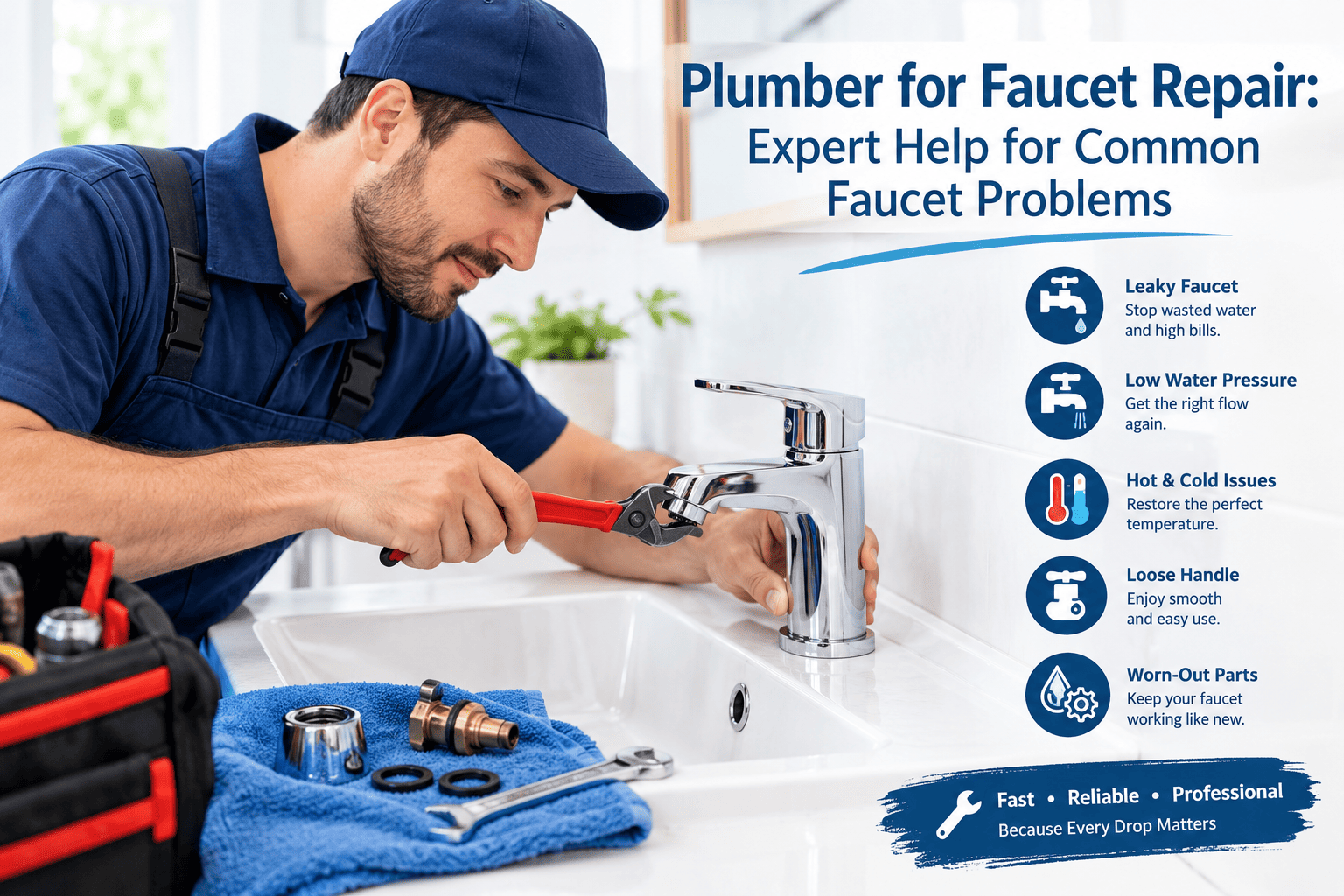
A plumber for faucet repair can diagnose and fix common issues such as dripping taps, leaking handles, low water pressure, loose fittings, and faulty cartridges. Professional faucet repair helps prevent water waste, protects cabinets and countertops from moisture damage, and restores normal water flow. Depending on the faucet’s condition, a plumber may replace worn components
Introduction: Why Faucet Repair Matters
A leaking faucet may seem like a small household problem, but ignoring it can lead to wasted water, annoying dripping sounds, mineral stains, and moisture damage around your sink. Whether the issue occurs in a kitchen, bathroom, laundry room, or utility area, finding the cause early can save time and prevent more expensive plumbing work.
A professional plumber for faucet repair can identify the source of the problem and recommend an appropriate solution. Instead of replacing the entire fixture unnecessarily, an experienced plumber checks the internal components, water connections, seals, and surrounding plumbing to determine whether a simple repair will restore proper performance.
1. Common Faucet Problems That Need Professional Attention
Dripping or Leaking Faucets
A faucet that continues dripping after the handle has been closed often has a worn washer, damaged cartridge, deteriorated O-ring, or faulty valve seat. These components help control water flow and create a seal when the tap is turned off. Over time, regular use and mineral deposits can affect their performance.
Although a slow drip may appear harmless, it can waste considerable water over time. A plumber can inspect the faucet mechanism, identify the damaged component, and replace it when suitable parts are available. Addressing the problem early also helps reduce staining around the sink and prevents the leak from becoming more difficult to manage.
Low Water Pressure
Low water pressure from a single faucet can make everyday activities such as washing dishes, cleaning vegetables, and brushing teeth frustrating. A clogged aerator, mineral buildup, blocked cartridge, or restricted supply connection may reduce the amount of water flowing through the fixture.
A plumber can determine whether the issue originates inside the faucet or somewhere else in the plumbing system. Cleaning the aerator may solve a minor blockage, while persistent problems may require cartridge servicing or inspection of the supply lines. If several faucets have weak flow, the cause could be a wider water supply or pressure issue rather than one faulty tap.
2. Kitchen Faucet Repair Services
Kitchen faucets experience frequent use throughout the day. Washing dishes, filling containers, preparing meals, and cleaning the sink all place repeated demands on the fixture. Over time, handles may become loose, spray heads may clog, and flexible hoses or internal seals may begin to leak.
A professional kitchen faucet repair service can address these issues by inspecting the handle assembly, cartridge, aerator, spray hose, and accessible water connections. The plumber can also check whether the faucet is securely attached to the sink or countertop. Correcting these problems helps restore convenient operation and reduces the risk of water collecting inside the cabinet beneath the sink.
3. Bathroom Faucet Repair Solutions
Bathroom faucets can develop several problems, including dripping spouts, stiff handles, leaking bases, and inconsistent hot and cold water control. Mineral deposits may accumulate around the aerator or inside the faucet mechanism, especially where the water contains a high concentration of dissolved minerals.
A bathroom faucet repair specialist can inspect the fixture and determine whether cleaning, seal replacement, cartridge repair, or another solution is necessary. Mixer faucets may need particular attention when temperature adjustment becomes difficult or the handle no longer moves smoothly. Professional servicing can improve everyday usability without requiring a complete bathroom renovation.
4. What Causes a Faucet to Leak?
Worn Washers, Seals, and O-Rings
Washers, gaskets, and O-rings help prevent water from escaping through connections and moving parts. Repeated use, age, friction, and mineral deposits can cause these components to deteriorate. When a seal no longer fits properly, water may escape around the handle, spout, or faucet base.
Replacing the correct seal often provides an effective solution when the faucet body remains in good condition. However, identifying the precise source of a leak is important because water appearing around one area may originate from a different component. A careful inspection helps avoid unnecessary part replacements and repeat repairs.
Damaged Cartridges and Mineral Deposits
Many modern faucets use cartridges to regulate water flow and temperature. A worn or damaged cartridge can cause persistent dripping, difficult handle movement, or inconsistent water control. Mineral deposits can also interfere with the cartridge’s operation and reduce the faucet’s overall performance.
A plumber can identify the faucet model and select a compatible replacement cartridge when needed. Using the correct component is essential because cartridges vary by manufacturer, design, and size. If the cartridge is not the problem, the plumber may inspect other internal parts before recommending further work.
5. What Does a Professional Faucet Repair Include?
A reliable faucet repair service generally begins with an inspection rather than immediately replacing parts. The plumber asks about the symptoms, checks the visible leak, examines accessible connections, and determines whether the problem is isolated to the fixture or connected to the wider plumbing system.
Once the cause is identified, the repair may involve replacing a washer, O-ring, cartridge, aerator, or damaged connection. The plumber should shut off the water supply before opening the fixture, use suitable tools, and reassemble the components correctly. Afterward, the faucet should be tested under normal operating conditions to check for leaks, proper flow, and smooth handle movement.
6. Can You Repair a Faucet Yourself?
Some minor faucet problems can be handled without professional assistance. For example, cleaning a removable aerator may improve water flow when debris is blocking the screen. Tightening an accessible, loose handle may also be straightforward if the correct tool is available and no internal damage is present.
More complicated repairs require greater care. Before disassembling any faucet, shut off the appropriate water supply valves and confirm that the water has stopped. If a valve is seized, a connection begins leaking, or a component resists removal, stop rather than applying excessive force. A qualified plumber is the safer option when the repair involves damaged pipes, concealed leaks, or difficult-to-remove fittings.
7. When Should You Hire a Plumber for Faucet Repair?
Professional assistance is particularly useful when a faucet continues dripping despite basic troubleshooting, leaks beneath the sink, produces unusual noises, or becomes difficult to operate. A faucet that suddenly loses water pressure may also require inspection, especially when cleaning the aerator does not improve the flow.
You should also seek help when the water supply cannot be shut off reliably or when moisture appears inside a cabinet or around a wall penetration. These symptoms may indicate a problem beyond the faucet itself. Prompt attention can help prevent additional damage and establish whether the repair requires replacement parts or more extensive plumbing work.
8. Faucet Repair Cost: What Should You Expect?
The cost of repairing a faucet depends on the nature of the fault, the type of fixture, the price of replacement components, and the plumber’s labor charges. Cleaning an aerator or replacing a basic washer is generally simpler than servicing a specialised mixer faucet or replacing a hard-to-find cartridge.
Other factors may include the accessibility of the faucet, the condition of the shut-off valves, the need for new supply connections, and whether an emergency visit is required. Rather than relying on a single advertised price, request an estimate that separates labor, parts, and any additional work. Ask whether the inspection or call-out fee is charged separately before approving the repair.
9. Faucet Repair or Replacement: Which Is Better?
Repair is often the sensible choice when the faucet is structurally sound and the problem comes from a replaceable component. A quality fixture with an available cartridge or seal may continue working well after a relatively simple repair. Fixing the existing faucet can also avoid unnecessary replacement costs and reduce discarded materials.
Replacement may be more practical when the faucet body is cracked, severely corroded, repeatedly leaking, or no longer supported by available parts. It can also make sense when several components have failed or when the homeowner wants a different design. A professional plumber can compare the likely repair cost with the cost of a new fixture and installation before recommending either option.
10. How to Choose the Right Faucet Repair Plumber
Choosing a suitable plumbing professional involves more than finding the lowest advertised price. Look for someone with relevant experience repairing kitchen and bathroom faucets, clear communication, and a willingness to explain the problem before starting work. Depending on your location and the job’s requirements, you may also need to verify licensing, registration, or other professional credentials.
Before hiring, ask about the service fee, expected labor charges, replacement parts, estimated completion time, and warranty coverage. Reading recent customer reviews can provide useful information about punctuality, workmanship, and how the plumber handles follow-up issues. A dependable professional should explain the available options and obtain your approval before performing additional work.
11. Simple Maintenance Tips to Prevent Faucet Problems
Regular maintenance can help extend a faucet’s useful life. Clean the aerator when water flow becomes uneven, wipe away mineral deposits, and avoid using harsh cleaning products that may damage the finish. Operate handles gently instead of forcing them when they become stiff or difficult to turn.
It is also helpful to inspect the area beneath sinks periodically for moisture, corrosion, or signs of leaking connections. Address small issues promptly instead of waiting for them to become serious. If the same faucet develops recurring problems, ask a plumber to investigate the underlying cause, such as mineral buildup, a damaged valve seat, or a supply connection problem.
Conclusion
A faulty faucet can interfere with everyday household activities, waste water, and contribute to avoidable moisture damage. Fortunately, many common problems can be resolved by replacing worn seals, cleaning blocked aerators, or servicing damaged cartridges. The right solution depends on the type of faucet, the source of the leak, and the condition of its components.
Hiring a plumber for faucet repair is a practical option when the problem persists, the water supply cannot be controlled safely, or the fixture needs specialised attention. Compare estimates, ask about parts and warranties, and choose a professional who explains the repair clearly. With timely maintenance and appropriate repairs, your kitchen and bathroom faucets can remain reliable for years.
Frequently Asked Questions
1. How do I know if my faucet needs repair?
Common warning signs include continuous dripping, leaks around the handle or base, loose handles, low water pressure, and difficulty controlling water temperature. If basic cleaning does not solve the issue, arrange an inspection.
2. Is it cheaper to repair or replace a faucet?
Repair is often less expensive when only a washer, seal, or cartridge needs replacement. A new faucet may be more economical when the existing fixture is badly corroded, repeatedly fails, or requires costly parts.
3. How long does faucet repair take?
A straightforward repair may take less than an hour, depending on the faucet design and the condition of its components. Complicated fittings, inaccessible connections, or additional plumbing problems can increase the time required.
4. Should I turn off the water before faucet repair?
Yes. Shut off the appropriate supply valves before disassembling a faucet. If the valves do not stop the water or appear damaged, contact a plumber before proceeding.