

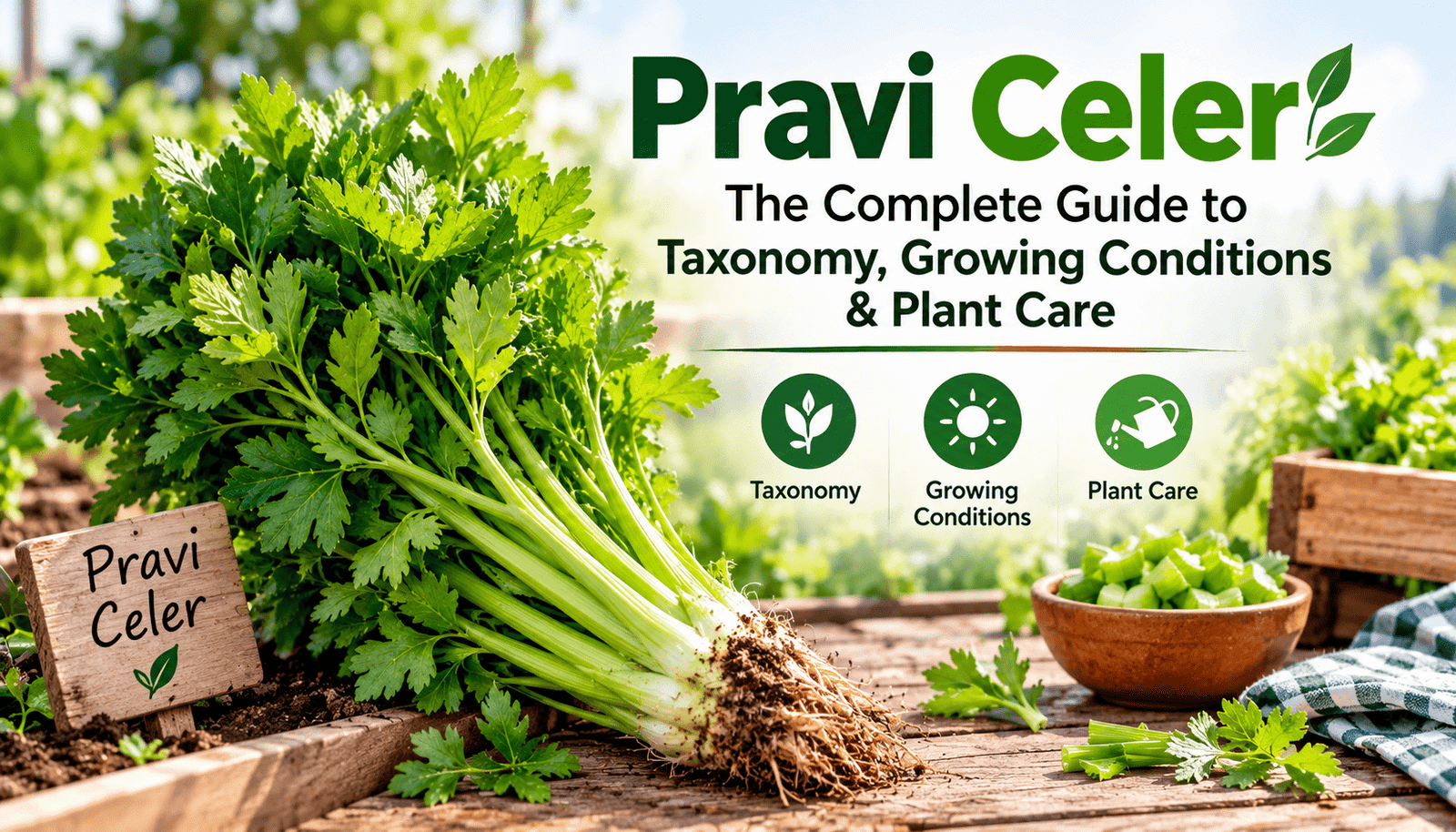
Pravi Celer is a phrase associated with true or genuine celery in South Slavic languages. It generally refers to celery (Apium graveolens), a member of the Apiaceae family. Celery is valued for its crisp stalks, aromatic leaves, and culinary versatility. Successful cultivation requires fertile, moisture-retentive soil, consistent watering, suitable temperatures, and appropriate sunlight. Understanding its botanical classification and growing requirements helps gardeners cultivate healthy plants and enjoy fresh celery at home.
Introduction
Pravi Celer is an interesting term for anyone exploring vegetable gardening, botanical classification, and traditional European food culture. Although the name may initially sound like a special plant variety, it is associated with ordinary cultivated celery rather than a universally recognized separate botanical species. The phrase can be understood as “true celery” or “real celery,” depending on its linguistic context.
Celery is widely used in soups, salads, stews, vegetable dishes, and other recipes. Its distinctive aroma and crunchy texture make it a useful ingredient in many kitchens. Beyond its culinary value, celery is an interesting crop for home gardeners because it demonstrates how soil quality, moisture, temperature, and planting methods influence plant development.
This guide explores the meaning of Pravi Celer, its taxonomy, physical characteristics, ideal growing conditions, planting methods, ongoing care, common cultivation problems, and harvesting practices. Whether you are researching the plant for educational purposes or planning to grow celery in your garden, understanding these fundamentals provides a reliable starting point.
What Is Pravi Celer?
Pravi Celer is associated with the expression “true celery” or “real celery” in South Slavic language use. The term is connected with the familiar celery plant, scientifically known as Apium graveolens. It should not automatically be interpreted as the name of a newly discovered plant, a special hybrid, or a unique cultivar.
Celery belongs to the same botanical family as carrots, parsley, and several other familiar culinary plants. Different cultivated forms have been selected for different edible parts. Some varieties are grown mainly for their crisp stalks, while others are valued for their aromatic leaves or enlarged edible root, known as celeriac.
The precise meaning of Pravi Celer can depend on the context in which the phrase appears. For gardening purposes, it is best to identify the specific celery type being discussed before choosing seeds or planning cultivation. This distinction helps gardeners select plants that suit their preferred recipes and growing conditions.
Taxonomy of Pravi Celer
Botanical taxonomy organizes plants according to their scientific classification and relationships. If Pravi Celer refers to cultivated celery, its classification follows the accepted taxonomy of Apium graveolens. Kew’s Plants of the World Online recognizes this species as an accepted botanical name.
| Classification | Details |
| Common name | Celery |
| Scientific name | Apium graveolens L. |
| Kingdom | Plantae |
| Order | Apiales |
| Family | Apiaceae |
| Genus | Apium |
| Species | Apium graveolens |
| Life cycle | Generally biennial |
| Main uses | Food, culinary seasoning, and cultivation |
These details describe celery as a botanical species; they do not establish Pravi Celer as a separate taxonomic category.
Understanding the Scientific Name
The scientific name Apium graveolens identifies the celery species recognized in botanical references. Scientific names are useful because common names can vary across languages, regions, markets, and gardening traditions.
The family Apiaceae includes numerous aromatic plants, including carrots, parsley, coriander, and fennel. Although members of this family share certain botanical characteristics, they differ in appearance, flavor, growing requirements, and culinary applications.
Celery is generally described as a biennial plant, meaning its natural life cycle can extend across two growing seasons. During the first season, it primarily develops vegetative growth. Flowering and seed production typically occur during the second season under suitable conditions, although environmental stress can cause premature flowering.
For accurate identification, gardeners should rely on the scientific name printed on a seed packet or supplied by a reputable nursery rather than assuming that every product labeled Pravi Celer represents the same cultivated form.
Physical Characteristics of the Celery Plant
Celery has recognizable green foliage, aromatic leaves, and grooved stems. Its appearance varies according to the cultivated form and growing environment. Stalk celery develops edible leaf stalks, while leaf celery is selected primarily for its foliage. Celeriac develops an enlarged edible root rather than the thick stalks associated with common supermarket celery.
The leaves are divided into smaller leaflets and release a characteristic aroma when crushed. Mature plants may produce small flowers arranged in umbrella-shaped clusters, a common feature of the Apiaceae family. Flowering generally occurs when the plant reaches its reproductive stage.
Healthy celery growth depends on adequate moisture, suitable temperatures, and access to nutrients. Plants grown under favorable conditions are more likely to develop tender stalks and attractive foliage. By contrast, prolonged dryness, unsuitable temperatures, or poor soil conditions can reduce growth and affect quality.
Understanding these physical differences is particularly useful when selecting seeds. A gardener who wants crisp stalks should choose a stalk-celery variety, while someone interested in an edible root should select celeriac.
Ideal Growing Conditions for Pravi Celer
Celery can be more demanding to cultivate than some common garden vegetables because it needs a relatively long growing period and a steady supply of moisture. The Royal Horticultural Society recommends fertile, moisture-retentive soil and regular watering for successful celery cultivation.
1. Climate and Temperature
Celery generally performs best in moderate conditions rather than prolonged extreme heat. Warmth is helpful during germination, while young plants need protection from unsuitable cold conditions. Temperature fluctuations can affect establishment and may contribute to premature flowering.
In warmer regions, gardeners should pay particular attention to seasonal timing. Growing celery during a comparatively mild period may produce better results than exposing young plants to intense summer heat. Local planting calendars and the recommendations supplied with the chosen seed variety are useful guides.
2. Sunlight Requirements
Celery grows well in a bright location with suitable sunlight. A sunny site can support healthy leaf development, but the best position depends on local temperatures and the variety being grown.
In hot climates, some protection from harsh afternoon sunlight may help reduce heat stress. Containers can be moved when necessary, while garden-grown plants benefit from a location that receives good morning light and avoids excessive environmental stress.
3. Soil Quality
Fertile soil with good moisture retention is important for celery. A loamy soil enriched with mature compost can provide a useful balance between water availability, nutrients, and root aeration.
Although celery needs consistent moisture, poorly drained soil can cause problems. The growing medium should retain enough water to support the plant without remaining continuously waterlogged. Preparing the soil before planting is often more effective than trying to correct nutrient or drainage problems after the crop has become established.
4. Water Availability
Water management is one of the most important parts of celery cultivation. The soil should remain consistently moist throughout active growth. If it repeatedly dries out, the stalks may become stringy, growth can slow, and the plant may develop a stronger flavor.
Water requirements increase during warm or dry weather. Containers usually require more frequent attention because potting compost can dry more quickly than garden soil. Applying mulch around established plants can help reduce evaporation and maintain more stable soil moisture.
How to Grow Pravi Celer From Seeds
Growing celery from seed takes patience because the seeds are small and germination can be slow. Starting indoors or in a protected growing area gives seedlings an opportunity to establish before being moved to their permanent location.
Step 1: Select the Right Seeds
Choose seeds labeled with the intended celery type. Stalk celery, leaf celery, and celeriac serve different gardening purposes, so selecting the correct type is important before planting.
Check the seed packet for information about germination, sowing dates, spacing, and expected maturity. These instructions are especially useful when growing a variety for the first time.
Step 2: Prepare the Growing Medium
Fill seed trays or small pots with a fine-textured seed-starting compost. The medium should hold moisture while allowing excess water to drain away.
Spread the seeds carefully over the surface. Celery seeds generally need light to germinate, so avoid burying them deeply. Follow the instructions supplied with the seed variety and gently water the compost to keep it moist.
Step 3: Maintain Suitable Conditions
Place the seed trays in a bright, warm location. Germination may take several weeks, so avoid discarding the trays too quickly if the seeds do not sprout immediately.
Keep the compost moist without saturating it. Once seedlings appear, provide adequate light and continue watering carefully. Crowded seedlings can be thinned or transferred into individual containers when they are large enough to handle.
Step 4: Transplant Carefully
Move young plants outdoors only when local conditions are suitable. Before transplanting, gradually expose seedlings to outdoor conditions over several days so they can adjust to changes in light, temperature, and airflow.
Prepare the final growing area in advance and water the seedlings after planting. Avoid damaging the roots or burying the central growing point too deeply. Appropriate spacing encourages airflow and gives plants room to develop.
Planting Pravi Celer in Containers
Container gardening is a practical option for people who have limited outdoor space. Celery can be grown in large pots or suitable planters, provided the containers offer adequate room for root development and have drainage holes.
Choose a quality potting mix that retains moisture while allowing excess water to escape. Small containers dry out rapidly, which makes consistent watering more difficult. A larger container can help stabilize moisture levels and reduce the frequency of watering during mild weather.
Place the container in a bright, sheltered location. In hot conditions, monitor the compost closely and protect the plant from excessive afternoon heat when necessary. Check drainage after watering to ensure that water is not collecting around the roots.
Container-grown celery may need additional nutrients because repeated watering can gradually reduce the availability of certain nutrients in the growing medium. Use a suitable vegetable fertilizer according to its label, avoiding excessive application. Regular observation is more useful than automatically adding fertilizer whenever growth appears slow.
Essential Pravi Celer Plant Care Tips
Once celery is established, regular maintenance helps support healthy growth. The main priorities are watering, soil fertility, weed control, pest monitoring, and protection from unsuitable environmental conditions.
Watering and Moisture Management
Water plants regularly and adjust the frequency according to the weather, soil, and container size. Watering early in the morning can be practical during warm conditions because it allows plants to receive moisture before the hottest part of the day.
Apply water to the soil near the plant rather than repeatedly soaking the foliage. This approach can help maintain root-zone moisture while reducing unnecessarily prolonged leaf wetness. Mulch can also help suppress weeds and reduce water loss from the soil.
Fertilizing the Plant
Celery benefits from fertile soil, but the amount of additional fertilizer required depends on the soil and growing medium. Incorporating mature compost before planting can improve soil structure and nutrient availability.
If plants require additional feeding, choose a fertilizer intended for vegetables and follow the product instructions. Excessive fertilizer can create nutrient imbalances and does not compensate for poor drainage, inadequate sunlight, or irregular watering.
Weed Control
Weeds compete with celery for water, nutrients, and growing space. Remove weeds carefully, especially while the plants are young and their roots are still developing.
A layer of organic mulch can reduce weed growth while helping the soil retain moisture. Keep mulch from pressing directly against the plant crown to reduce the risk of rot.
Pruning and General Maintenance
Remove damaged or diseased leaves when necessary, using clean gardening tools. Avoid removing large amounts of healthy foliage because leaves help the plant produce energy for continued growth.
Check plants regularly for discoloration, unusual spots, pest activity, and changes in growth. Identifying problems early makes it easier to adjust watering, improve airflow, or seek suitable pest-management advice.
Common Problems When Growing Pravi Celer
Even when gardeners follow recommended practices, celery can experience several growing problems. Most can be managed more effectively when their causes are identified early.
Premature Flowering
Premature flowering, also called bolting, occurs when a plant begins its reproductive stage earlier than expected. Temperature stress and unsuitable conditions during early development can contribute to this problem.
Choose varieties suited to the local climate and follow recommended planting dates. Protect young plants from inappropriate temperature conditions and avoid moving seedlings outdoors before they are ready.
Stringy or Tough Stalks
Stalks may become tough or stringy when plants experience insufficient moisture or other growing stresses. Celery requires a reliable water supply throughout its growing period, especially during warm weather.
Improve soil preparation, use mulch when appropriate, and check moisture regularly. Container-grown plants may need more frequent watering than plants growing in the ground.
Yellowing Leaves
Yellow leaves can indicate several different problems, including irregular watering, nutrient deficiencies, root stress, or disease. Yellowing alone does not identify the exact cause.
Examine the soil moisture, drainage, and general condition of the plant before changing fertilizer levels. If yellowing spreads rapidly or appears alongside unusual spots or wilting, seek advice from a local gardening expert.
Pests and Diseases
Celery may be affected by slugs, snails, leaf-mining insects, and leaf diseases. Pest pressure varies by region and season.
Inspect leaves regularly, remove badly affected plant material when appropriate, and avoid overcrowding plants. Watering at soil level and maintaining suitable spacing can improve growing conditions. Use any pest-control product only when it is appropriate for edible crops and follow its label carefully.
When and How to Harvest Celery
Harvest timing depends on the celery type, variety, planting date, and growing conditions. Stalk celery is generally harvested when the stems have developed sufficient size and quality. Leaf celery can be harvested gradually by picking suitable leaves, while celeriac is grown for its enlarged root.
Use clean tools to harvest stalks or remove individual leaves. Handle the plants carefully to avoid unnecessary damage. If the selected variety allows gradual harvesting, taking only the required amount can help preserve the remaining plant for continued use.
For the best eating quality, harvest celery while the stalks are crisp and the leaves are in good condition. Avoid leaving harvested produce exposed to heat for long periods. Refrigeration can help maintain freshness, although the exact storage life depends on the vegetable’s condition and storage environment.
Culinary Uses of Pravi Celer
Celery is a versatile ingredient that contributes a fresh, aromatic flavor to many dishes. Its stalks can be eaten raw, chopped into salads, served with dips, or added to sandwiches. Cooking softens the texture and allows its distinctive flavor to blend with other ingredients.
Celery is also commonly used as a base ingredient in soups, broths, sauces, and stews. Its leaves can provide extra aroma when chopped into suitable recipes, while celeriac can be roasted, mashed, or incorporated into soups and salads.
The best preparation method depends on the cultivated form available. Stalk celery is particularly useful when a recipe needs crisp texture, whereas celeriac is suitable for dishes that benefit from a substantial root vegetable. Choosing the appropriate type helps achieve better results in the kitchen.
Nutritional Value of Celery
Celery is a water-rich vegetable that can contribute to a varied and balanced diet. It provides nutrients, including vitamin K, and contains smaller amounts of other vitamins and minerals. Its water content and crisp texture also make it a useful addition to meals and snacks.
However, its nutritional composition varies according to the edible part, variety, and preparation method. There is no reliable basis for assuming that the phrase Pravi Celer identifies a special celery type with superior nutritional properties compared with ordinary celery.
Celery can be enjoyed as part of a balanced eating pattern, alongside other vegetables, fruits, grains, and sources of protein. It should not be treated as a miracle food or as a replacement for medical treatment. People with a celery allergy should avoid it and seek appropriate medical guidance.
Frequently Asked Questions About Pravi Celer
1. What does Pravi Celer mean?
Pravi Celer is associated with “true celery” or “real celery” in South Slavic language use. It generally refers to cultivated celery, although the intended meaning can depend on the context.
2. What is the scientific name of Pravi Celer?
When the term refers to ordinary cultivated celery, the scientific name is Apium graveolens L. It belongs to the Apiaceae family.
3. Is Pravi Celer a separate plant species?
There is no established botanical basis for treating Pravi Celer as a separate species from ordinary celery. The phrase is generally associated with true or genuine celery rather than a distinct scientific classification.
4. What are the best growing conditions for celery?
Celery generally needs fertile, moisture-retentive soil, regular watering, suitable sunlight, and moderate growing conditions. Local climate and the chosen variety influence planting times and performance.
5. Can Pravi Celer grow in pots?
Yes. Celery can grow in containers when the pot provides adequate space, drainage, and moisture retention. Container-grown plants require regular monitoring because their growing medium can dry out quickly.
Conclusion
Pravi Celer is a useful term to understand when researching celery, its botanical identity, and its role in gardening and cooking. The phrase is generally associated with true or genuine celery, scientifically identified as Apium graveolens, rather than a separate botanical species.
Successful celery cultivation depends on selecting the right variety, preparing fertile soil, maintaining consistent moisture, providing suitable sunlight, and monitoring plants for common problems. Gardeners should also consider their local climate when choosing planting dates and growing methods.
Whether grown in a garden bed or a container, celery can be a rewarding crop when its basic needs are met. By understanding its taxonomy and cultivation requirements, gardeners can make informed choices and enjoy fresh celery in a wide range of everyday recipes.
 Blessingtide.com usa